
S4E404 - Transcript
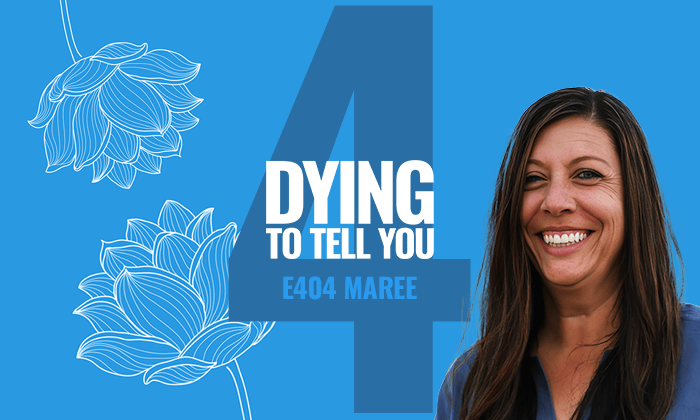
Listen and subscribe on Spotify or Apple Podcasts.
“Do It Now: Living with ALS, One Trip at a Time”
MaRee: You are told, the doctor’s like, if you’re gonna do it, do it now. Because you’re just going to get worse. Do not put it off. So as soon as I could quit my job, I did. I quit my job September 14th, so a month after I was diagnosed. And I haven’t stopped since.
Cody: MaRee is a hospice nurse. In April of 2023, she noticed that her right leg was feeling weak and she started having Charlie horses. This was the beginning of over two years of trying to figure out what was happening to her body, and the diagnosis at the end of that time would change nearly everything about her life.
The symptoms of weakness and cramping persisted and progressed, but as MaRee said, she's a nurse, and she's very slow to get things checked out. Eventually her patients began to notice and asked what was wrong. So MaRee went to a doctor — and, as any good medical worker would do, another doctor for a second opinion.
Both doctors agreed that the weakness was due to a cyst on her spine that was impinging the nerve and causing weakness. After a series of injections and an arthroscopic procedure, MaRee had no relief. In fact, her symptoms continued to progress. She began stumbling, and her right leg began to atrophy. She saw three more doctors. The consensus was that she needed a fusion of her L4-L5 vertebrae, so in September of 2024, she did that surgery. Usually a quick recovery — but this time MaRee was in the hospital for days with blood pressure and heart rate issues. In November of 2024, she took a bad fall in her daughter's driveway that sent her back to the hospital.
With her symptoms continuing to progress, MaRee kept seeing doctors. In August of 2025, she had EMGs on her arms that showed significant weakening. A neurologist sat down with MaRee and her daughter and said the thing they'd hoped they would not hear: you have ALS. She's seen ALS in her work, and she knows how difficult it can be.
MaRee realized that she wouldn't be able to continue working, and would not be able to keep her home. She says that one of the hardest things she's ever done is watching her kids help her clean out memories from decades of building a life — over two years of struggling to understand what was happening to her body. Two years in which her life changed completely, and at the end of those two years, MaRee is faced with a diagnosis she had feared more than any other. How does one face something like that? That's the story MaRee is here to tell.
This is Dying to Tell You.
MaRee: Every test that they ran never showed ALS — never, because, you know, ALS is a process of elimination, right? That's how they diagnose you. There's not one specific test. I'd done my own research. I had my primary care doctor run a neurofilament light chain test, and he's like, "I don't know enough about this to know what it means — I'm in internal medicine, I've only had one ALS patient, but I'll run it for you." I couldn't even do it at the local hospital where I was working because it was a specialty test, so I had to go somewhere else. My levels were double, and I found that out before I went to the neurologist. And my CK — creatinine kinase, that's a kidney function marker — mine was really high too. So every test they ran eliminated all the other diagnoses.
Cody: Yeah. Y'all had some suspicion of what it was, right? And when you got the diagnosis, I can imagine all the things that must have been going through your mind. What was the discussion like between you and your kids about what to do — selling the house, spending time with each of them? I'm just wondering how that came to be, because it's a really difficult thing to do. It's also really beautiful for you guys to be able to do that with each other. So I'm just curious how y'all decided on that.
MaRee: So we had a family meeting — my kids hadn't all been together for six years, so it was a very good thing on its own. I told them my wishes. Being a hospice nurse, I've personally cared for probably three ALS patients, and it's a hard, hard, horrible disease. At first I think they were a little frustrated, because I said, "I'm a DNR. Don't ventilate me. Do not put a feeding tube in me." I've also lost a lot of weight and have swallowing issues — but like I told the nutritionist and the dietician, I got divorced too. I didn't lose 35 pounds from ALS alone. I had life happen right in there also.
Cody: Sure.
MaRee: Anyway, so we sat down and decided that I would sell the house and rotate between all of them until I couldn't anymore. My oldest daughter, who's a nurse, bought a tiny home that has a ramp up to it, so when I go there I have my own space — which is nice, because that's probably where I'll end up at the end. It's very interesting — my kids are all begging for me to come stay with them, which is a good thing.
And, um, my love language is traveling with whoever — that's what I love to do. I love to take my family and go have new experiences, do new things together. So I let them all choose a place to go on vacation. We're all going to Alaska — that's my bucket list, the one thing I've never done. End of June, we're all going to Alaska. And the day before we go, since I'll have all my kids there, we're having a celebration of life. I've had a few hospice patients do that while they're still alive, and they say it's the best thing they've ever done. So we're having a celebration of life the day before we go to Alaska.
Cody: I want to hear more about your plans for the celebration of life, but I want to go back to the conversation you had with your kids about your wishes. In my experience, sometimes people have very specific thoughts about what they want and don't want before anything happens, and then after the diagnosis, things can change — they become a little more flexible. But it sounds like you had very specific ideas, and you haven't wavered on that at all. Would you talk to me about that a little? I know you said no ventilation, DNR, no feeding tube. Why do you have such a firm stance on that?
MaRee: Well, it's part of my personality — once I make up my mind, I've never changed it. Taking care of these patients, and realizing that my children are going to have to take care of me... it's a horrible disease, and I don't want it to be prolonged in a vegetative state. I just do not want that. If I can't eat anymore, I can't eat anymore. If I can't swallow, I won't swallow. If I can't breathe, I won't breathe. I want it to be the natural process. So I don't want any interventions. My doctor told me, "MaRee, you just know too much — will you please consider a feeding tube?" And I said no. At the ALS clinic, they've really been questioning me over and over on the feeding tube, because when I was living alone, I wasn't eating — I couldn't really cook, I was just drinking protein shakes. That was a huge issue. Once I moved in with my children, I go to the ALS clinic every three months, and I've only lost one pound, so they're making sure I'm eating. As long as I can eat and enjoy food and talk and be interactive with my children and grandchildren, that's what I want.
Cody: How did your children respond when you laid all that out? Were they cool with it, hesitant?
MaRee: A few of them were hesitant on the feeding tube — they still ask me about it, because it was pitched to me that you need nutrition to have energy, and I am tired a lot, which I agree with. But now I'm eating — I really just have to watch what I eat so I don't choke. Now I'm eating and maintaining my weight, I'm okay. My oldest, again, is a nurse, and she says, "I respect her wishes and I will do what you want." I think the other three have come to the realization that that's my wish, and they'll respect it. Of course they want their mom around as long as possible, but —
Cody: Of course.
MaRee: — I'm always preaching, with hospice, that it's not about quantity, it's about quality. Quality time — not about how long I have. I did take the ALS drug that's supposed to extend your life by two to three months — but I actually lost weight, got sicker, and slept more, so I quit taking it. I decided that's not worth it. I'm a nurse, and I don't like to take pills — I really don't. I literally just take my muscle relaxer, which helps me sleep. I'm supposed to take it during the day too, but I don't, because I like to function.
Cody: The other thing that comes up for me, as you're talking about no feeding tube, no ventilation, DNR — I think for a lot of people that would be scary, because if you can't breathe, and you won't breathe... I've had the wind knocked out of me before, and I know how terrifying that is. I think I know the answer, but is that scary to you?
MaRee: A little bit. Again, being a hospice nurse, I've learned that with ALS patients, you have to medicate more to keep them comfortable. I'm not against something like a BiPAP, but I do not want a trach and a ventilator. I've had asthma, so — yeah, it's scary when you can't breathe.
Cody: Right. But I guess what I'm getting at is, as a hospice nurse — as somebody who's worked with patients at the end of life — you're aware that you can keep somebody comfortable, even when they can't get a good, deep breath.
MaRee: Right, absolutely.
Cody: I think that's important for people to know, because people have this idea that if your muscles aren't working and you can't breathe, it's just going to be suffocation — which is a very horrible, terrifying thing to imagine. I've seen it, and I know — and you've seen it, and you know — but I think most people don't realize it can be very peaceful and comfortable at the end of somebody's life, even when they can't breathe. I think, honestly, unless you've seen it, it's hard to understand.
MaRee: Right. And I'm really good friends with my doctors, and they've said they'll give me what I want — I mean, what's legal — to keep me comfortable.
Cody: Right. And I think any good hospice nurse or doctor would do the same.
MaRee: Yeah, no, they're great.
[Music: "Will you look through my eyes? What if..."]
Cody: It seems like your decision about selling the house and going to be with your kids wasn't only about practicality, but also about using the time you have as well as possible — going to Alaska, doing your travel. What all have you done? How are you using your time?
MaRee: The day after I was diagnosed, I already had a scheduled trip planned — to Hawaii, with my son and his girlfriend and my sister-in-law. My sister-in-law, my brother's wife, and I travel a lot together, so she's still my caregiver when I travel. Since I've been diagnosed, I've been to Hawaii, Glacier National Park in Montana, a Disney cruise to Mexico, Yellowstone on snowmobiles — we went ninety miles, I was the passenger. We've been to South Carolina, Myrtle Beach, Darlington, Columbia, Charlotte. It's funny — the ALS clinic loaned me a little red electric wheelchair, and I have a list of every place that thing's been. This last weekend we went to Kanab with my brother, sister, and son, for a hot air balloon festival, which was really fun. I also spent a week in St. George. This has all been since August.
Cody: And we should be clear — this is March 1st.
MaRee: So I decided when I was diagnosed — that was the plan, since I couldn't live alone anymore — to sell my house and travel with my kids. So that's what we're doing. We've got a trip planned to Canada, Victoria Day in Victoria, British Columbia, and Banff, and then Alaska.
Cody: Where are you going today?
MaRee: To Hawaii. My youngest daughter — like I said, I let them all choose where their family wanted to go — she wanted Hawaii. I could go to Hawaii every day. I don't know if it's psychological, but my bones don't hurt there. I have sea legs — they work really well in the water, not on land. So I love it — we're going swimming with the turtles. Should be fun.
Cody: That's a lot, since August of last year to March of this year, to go to all those places.
MaRee: Well, you're told — the doctor's like, if you're gonna do it, do it now, 'cause you're just gonna get worse. Do not put it off. So as soon as I could quit my job, I did — I quit September 14th, a month after I was diagnosed, and I haven't stopped since.
Cody: Yeah. It reminds me of — the way to beat whatever it is, is to not let it dictate everything about your life, and to do the things you want to do, to live the way you want to live. For some people that's, "I just want to do my normal stuff, stay home." For others it's doing the trips they've always wanted to do, new and novel things. When somebody's diagnosed — when a plot twist happens in life — you have to let go of whatever story you thought was coming. For some people that's harder than for others. And it sounds like the house in particular was kind of symbolic of a big portion of life you had to let go of, and at the same time you were welcoming something else in — a new stage. How was that for you, the process of realizing you had to let go, but also opening up to receive something new? If I'm honest, it's very beautiful — very cool, what you and your family are doing. But I imagine it was also difficult to get to that place, even though it seemed to happen quickly. How did you do that?
MaRee: It was — I had all my children here. My son has a dump trailer, and — I feel so bad now for all my patients, because they'd complain, and now I get it. My kids came in and cleaned my house and threw away my stuff. It was really, really hard. I started with my clothes, because now I can only wear stretchy stuff I can lay down and put on, since when I fall — I was in the bathroom trying to get my clothes on. I was thankful two of my daughters could wear a lot of my clothes, so they took those. Then we got into the Christmas decorations and the crafts, and I told all my kids, "Come in, tell me what you want, tell me what you want," before we got rid of anything. By the end — we did it in ten days — we cleaned out my house, listed it, and sold it. Ten days to clean it out and list it, then it sold in three weeks. It went fast. My son backed his dump trailer up to the upstairs window and just started chucking things out. It felt so good — so rewarding. It was stupid stuff, honestly — you know there's a book out called Nobody Wants Your Stuff? It's so true. My kids had a heyday just chucking things.
But I did let them choose what they wanted out of the house, and they chose things I never would have imagined — my son took my hope chest that was made by my great-uncle. I only have one son, and that's what he wanted. My daughter took my kitchen table, which was beautiful, and I loved it. My other daughter wanted my porch rocking chairs. Just random stuff I never would have thought in a million years they'd want. It was very overwhelming — emotionally, mentally, physically. Physically, because I couldn't do anything. My kids are really good at saying, "Hurry, throw it away before she sees it." I was frustrated, I'll say that — very frustrated at the beginning. It was very hard. But then I thought, what am I going to do with it? So — I went from a 3,600-square-foot home, 31 years, to each of my kids having a little 300-square-foot room for me, and I just pack around three suitcases. It was very hard to get rid of it, but it was also rewarding, to open a new chapter in my life. And I have all my kids with me, and my grandkids.
Cody: It really is beautiful. I was thinking about how so many people don't get to see what you got to see — your kids cleaning out your house. A lot of people just die, and then their kids go in and clean out the house and take what they want. What a surreal experience, to get to watch them go through the things from their childhood — to see that your son wanted your chest, your daughter wanted the table and the rocking chairs — to see what was important to them and what they valued. That's a cool thing a lot of people don't get to see.
MaRee: Right.
Cody: Well, I want to hear about the celebration of life — what's the plan there?
MaRee: We rented the local park, and we're having it catered — a catered meal, balloons. I'm having a videographer with a balloon backdrop record people as they come in, leaving messages for me. It's just going to be a big party. I'm inviting a lot of people. It's going to be fun.
Cody: So people get to come and record a message for you, and you get to see that at some point.
MaRee: Yep. And then I get to mingle with everybody who's coming. I've been a hospice nurse for seventeen years, until I quit. I love my patients — I miss them.
Cody: Well, it sounds like you were a pretty good mom too. Your kids are showing up for you in a pretty significant way, which makes me think they love and appreciate you.
MaRee: They're amazing. I have four amazing children, who are willingly taking care of their sick mother.
Cody: Kids don't get that way by accident. Good job.
MaRee: They're just so young — I have six grandkids under six. I just want to spend as much time with them as I can.
[Music: "Wake up, heal, laughter. Let it echo from within. Step out, love, grow in deeper. Let the brighter days begin. Every time when you smile..."]
Cody: I'm just struck by the courage it takes to accept the diagnosis so quickly, to make your decisions about your wishes, to let your family know, to let go of so much stuff — and not only to let go, but to accept this new stage in your life with open arms. And it all happened really quickly.
MaRee: I think God has tested me, and I have a freaking hard head. I've had a lot of experiences in life with my kids — my ex-husband had cancer, my son had kidney failure, my daughter lost her oldest baby, my daughter — she was 17 at the time — had Hodgkin's lymphoma. I've just had a lot happen to me. I don't know if it prepared me for this. I've always taken care of everybody, and I feel like — and this might sound mean — staying with my husband at the time was killing me physically, emotionally, mentally, and I thought if I could get away, I'd get better. Mentally, I did get better, and I've been doing well for a long time — but physically, it took a toll on my body. So my kids are strong because they've had to be strong.
Cody: I think that's a good point. As I think about my own life, and the things I've seen working in the hospital, working in end of life, and doing this podcast — I think part of the hope is that seeing and hearing from people going through this, like yourself, gives some thought to how things are going to go, and gives us some semblance of acceptance that at some point things are going to move toward the end of life. Obviously it came quicker for you than you would have hoped. But I think that's the real hope — to give some thought to how we want it to be when it comes, so that when it does, we have some idea about how we want it. Maybe you're right that working in hospice, and experiencing illness and loss in your own family, prepared you to make that acceptance — to make the switch from the life you thought you were living to this new life that's going to come to an end sooner than you thought. How has it been for you, going from the caregiver to the patient?
MaRee: Hard. I always say I'm a great giver and a poor receiver, and I'm hardheaded — I think that's why I can do what I'm doing, because in my mind, I can still do everything. I don't know how I walk some days, my legs are so bad, but I get in my wheelchair and go. It's definitely slowed me down, but it hasn't stopped me yet. Again, I've seen this in patients, so I think that's helped. And like my doctor said, "MaRee, you just know too much, you've seen too much." So — I can just persist as long as I can.
Cody: Do you find you're more willing to accept help over time?
MaRee: Yes, I have to now, because I can't drive. It's kind of frustrating that I can't just go out, get my car, and drive. I don't mind them driving me, that's fine — I just feel, and I know I'm not, but sometimes I feel like a burden.
Cody: Yeah, that's really hard. I've talked to hundreds of patients who've said those same words — "I feel like a burden." I think the knee-jerk reaction of family is to say, "Oh, you're not a burden." And in a way, you yourself aren't a burden — but there is a burden associated with caring for somebody who's ill and needs help. I think the more generous way to say it is that they're willingly, maybe even excitedly, accepting the burden — they want to be there doing that for you. And as much as you don't like to receive, there's a lot of beauty and grace in receiving care from somebody who loves you that much. You're giving them a gift by allowing them to do that — they're going to have this time now that they wouldn't have had otherwise, to care for you in a gentle, tender way, and help you in ways a lot of people don't get that kind of intimacy with their parents.
MaRee: And I've learned, over time, that caregiving is the hardest job in the world — I'll say that a thousand times. I've actually had probably three caregivers die before their patients, because they didn't take care of themselves. That's my biggest reason for rotating between my children — I also have a sister who lives close, and a cousin, and a brother, and everybody's willing to let me stay. I always tell my kids, "I have a lock on the door," but I've never locked it yet. But yeah, caregiving is the hardest job in the world. My kids are all 22 to 29, so they're young — they have lives, kids of their own, things to do. It takes time out of their days to help take care of me. I can still get dressed by myself most of the time, but sometimes I need help — they cook for me, do my laundry, take me wherever in my wheelchair. It all takes time, and I don't want them to burn out, so we have a deal: when they need a break, they get a break. There's plenty of other places for me to go.
Cody: Are they speaking up when they need a break?
MaRee: Not really — I can just tell. My one daughter's had some life stuff happen to her, so I gave her a break — not because she asked for it, but because I felt like she needed it.
Cody: You're just trying to be conscientious.
MaRee: Right.
Cody: Good for you. You mentioned God earlier — if you're open to it, I'm curious about your thoughts on God, and where God plays into all of this.
MaRee: I do believe in God, and I do believe things happen for a reason. Sometimes you wonder — I don't question why, I question what. What am I supposed to learn from this? Being in hospice, you see a lot — the good ones going young. I'm not saying I'm good, but taking care of pediatric patients — I believe the purpose of younger people dying is for the rest of us, living, to learn something. I've taught my kids that everybody has something to teach you — some people are there to make you better, some are there to be the bad example, not someone to be like. I've also taught them: if you have a problem, and you're going to complain about it, you'd better have a plan in place, and I'll help you — but I'm not going to be the whole solution. I think I have a lot to learn, and maybe my kids have a lot to learn too. It's definitely brought my family closer — my siblings especially. We had a very dysfunctional family growing up; my aunt and uncle raised me, and they're both gone now, and my dad's gone too. We learned we had to stick together and take care of each other, because we didn't have our parents around to do it. We've stayed close, but it's brought us even closer. I've invited them on all my trips — they wanted to come to Kanab with me, which was nice.
Cody: I like what you said, that you don't question why, you question what. I'm wondering — what have you learned so far?
MaRee: Patience was never one of my strong points. I've had to learn to be more patient — maybe it's a good thing I physically can't just get up and do it myself, because I would. I have to rely on others most of the time for anything I need. I've learned that it's okay to let people help you, and that that's the way they show love.
Cody: That's a hard lesson to learn.
MaRee: Yeah. I don't know what else I've learned — my kids and my siblings have gotten closer, so that's good. We know we're there for each other.
Cody: One of our guests from last season, Kelly, also has ALS, and she said something very similar about being forced to slow down and renew relationships with people. And I recently talked to Deanna, another guest with ALS, who echoed the same thing — when you have to slow down and let other people do things for you, a lot comes from that intimacy of giving and receiving care, and learning patience. Which sounds like a wonderful lesson for the rest of us too.
[Music]
Cody: I've got a couple other questions we usually end on. What else would you want to say that we haven't talked about?
MaRee: This comes more from a hospice nurse standpoint — one of my very first patients in hospice was a big farmer who sold his farm to a big corporation, and he lived one week. When you're sitting with hospice patients, you hear all their regrets. At that point I decided, we're going full force — you spend the time with your family, you go on those vacations. My one daughter said, before I became a nurse, "Mom, can't we be poor again? It was so fun just to go camping in the mountains every weekend." So I always tell people — don't wait. Don't wait till your kids are older, don't wait till they graduate. Do it now. Like me going to Europe — there's no way I could have gone to Europe before. No way.
MaRee: So, yeah — just enjoy the time you have, make the most of it, and literally live each day like it's your last. I've had to really think about that every day. I keep praying I die of a heart attack, and go fast — that's my wishful thinking, because I don't want to drag it on. But yes, my advice to everybody is to live each day as your last, and enjoy the time you have with your family, because that's the most important thing.
Cody: Thank you for that. That's good. So — in a year, or two years, or five years, however long you have left — at some point you'll come to the end of your life. Do you have thoughts on the afterlife? You said you believe in God — do you have any thoughts about what that's going to be like?
MaRee: I believe I'll see my loved ones again — see my dad, my aunt and uncle. I tell my kids, I think I'm the lucky one — going to see them — and I'm so glad it's me and not one of my kids, because I don't think I could bear losing a child. I think it'll be a joyful reunion. I have a friend who wants me to send her the Powerball numbers when I get to the other side — you always joke with your hospice patients, "Go tell my dad hi for me, go give him a hug."
Cody: Have you ever had any kind of experience — a sign from somebody, something like that?
MaRee: I don't see things the way some people do — I just get a feeling that they're there with me.
Cody: Well, I hope it's as joyful as you hope it'll be.
MaRee: My kids ask me what the sign will be for them. My one son-in-law said, "You're gonna be a magpie." And I said, "You bet I will — I'll be squawking in your window every morning."
Cody: They're so annoying.
MaRee: I don't know how I'll give them signs, but that's fun anyway. I told them I'll hunt them down, so they better behave.
Cody: The last thing I ask everybody — how do you want to be remembered?
MaRee: I'd love to be remembered as a good mom. I don't know if I was a great mom, but a good one. Believe it or not, I'm usually the loud one at parties, laughing — we actually got in trouble on a train in Europe once, they told us we were too loud. Empathetic — I'm definitely empathetic, I've been through a lot, seen a lot personally. And loyal — I'm a loyal friend. So, yeah, that's how I'd want to be remembered.
Cody: Good stuff.
MaRee: Goodness gracious, I'm sorry, I keep crying.
Cody: That's all right, you have reasons. Well, thank you so much for sharing, for being so open and vulnerable. I'm going to let you go so you can go to Hawaii now.
MaRee: Okay, I will, I will. I love the sun, I could just sit in it all day.
Cody: Enjoy it.
Cody: Thank you, MaRee, for sharing your perspective as a nurse, a patient, and a mother. I've often said it's a healthy sign when people are able to laugh and cry in the same conversation, and we got plenty of both in this one. I hope your travels and your time with family continue to bring joy and meaning to your life.
If you'd like to see video of this interview or other interviews, please join us at patreon.com/dyingtotellyou. It's free, and it's where we'll be putting up extra content, including follow-up episodes with past guests. And if you like what we're doing here at Dying to Tell You, be sure to follow and share on social media. We want to honor our guests by getting their stories into as many ears as we can. Thank you so much for listening. This is Dying to Tell You.
